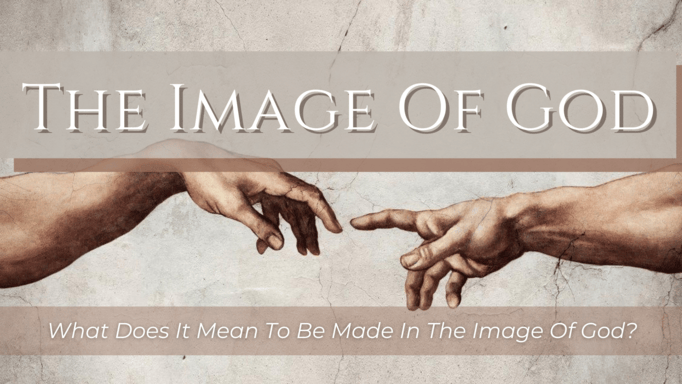
The articles and blog posts shared on the topic of being created in God’s image are only the tip of the iceberg. This subject has been studied, discussed, and debated for hundreds of years. My desire to add my own perspective has grown out of both what I have read and what I have personally experienced. I intentionally cited a variety of books and included website resources to encourage readers to build on what I have written and conduct their own research. As you do, remember that the Bible must remain the starting point when seeking to understand what God has revealed about humanity and His image. The Scripture has withstood centuries of examination, discussion, criticism, and even scientific inquiry. It remains the foundation upon which we can build our understanding of God, His character, and His purposes. As we explore this topic, our goal should not simply be to gather information, but to deepen our understanding of the One in whose image we have been created.
Our minds, bodies, and spiritual lives should not be treated as unrelated compartments. Although each has distinct characteristics, our daily experiences remind us that they are closely connected. A lack of sleep can affect our mood and concentration. Physical activity can support emotional well-being. Stress can influence our physical health. Spiritual practices such as prayer, Scripture reading, worship, and fellowship can provide direction, hope, and encouragement as we face life’s challenges.
Research offers helpful insights into these connections. Dr. I-Min Lee, a professor of medicine at Harvard Medical School who studies physical activity and disease prevention, has emphasized that physical activity does not have to occur in one long exercise session. Shorter periods of movement can contribute to meaningful health benefits (Harvard Health Publishing). This reminds us that caring for our bodies does not always require dramatic changes. Consistent, practical steps can make a difference.
Psychologist Devon Price, writing in Psychology Today, also challenges the idea that our thoughts, feelings, and bodily experiences can be neatly separated. He explains that thoughts influence emotions, emotions influence how we perceive our experiences, and our physical experiences can affect how we feel (Price). These observations help us recognize the complexity of human experience.
These scientific and psychological perspectives complement an important biblical principle: God calls us to live faithfully as whole people. Scripture encourages us to renew our minds (Rom. 12.2), honor God with our bodies (1 Cor. 6.19–20), and love Him with all our heart, soul, and mind (Matt. 22.37).
However, we must maintain an important distinction. Physical health does not guarantee spiritual maturity, and illness, disability, exhaustion, or emotional struggles do not mean that someone has failed God. Faithful stewardship is not about achieving perfect health or presenting an outward appearance of having everything together. It is about responding to God’s grace and caring for the life He has entrusted to us, according to our circumstances and abilities.
As followers of Jesus Christ, we are called to be faithful stewards of what God has entrusted to us. As you reflect on this series, ask yourself: Am I feeding my mind with truth and wisdom? Am I caring for my body through healthy choices and appropriate rest? Am I cultivating my spirit through prayer, Scripture, worship, and obedience to Christ? Which area have I neglected, and what practical step can I take to grow? The goal is not perfection, but faithful stewardship—honoring God with every part of our lives.
Being created in God’s image is more than a theological concept; it should shape how we see ourselves, treat others, and live before our Creator. Our minds enable us to learn and pursue truth, our bodies enable us to serve and care for others, and our spiritual lives are meant to be rooted in our relationship with Jesus Christ. We must not neglect one area while developing another, remembering that our worth rests not in our performance or physical health, but in God’s design and grace. The question is not simply whether we are improving ourselves, but whether we are learning to live faithfully before Him.
Paul reminds us, “Whether therefore ye eat, or drink, or whatsoever ye do, do all to the glory of God” (1 Cor. 10:31, KJV). May we honor God with our minds, care for the bodies He has entrusted to us, and cultivate our relationship with Jesus Christ, seeking to reflect His character in every area of life—not for our glory, but for His. As we conclude the “Created in the Image of God” series, may we continue seeking the real God, following the real Savior, and growing in our understanding of the real Holy Spirit revealed in Scripture.
Supporting Resources
The Bible. Authorized King James Version, Oxford UP, 1998.
Harvard Health Publishing. “Updated Exercise Guidelines Showcase the Benefits to Your Heart and Beyond.” Harvard Health, https://www.health.harvard.edu/heart-health/updated-exercise-guidelines-showcase-the-benefits-to-your-heart-and-beyond. Accessed 28 Oct. 2026.
Price, Devon. “‘Thoughts Are Not Feelings’ Is Bad Psychological Advice.” Psychology Today, 1 Oct. 2022, https://www.psychologytoday.com/ie/blog/shrugging-off-should/202210/thoughts-are-not-feelings-is-bad-psychological-advice.


Leave a Reply