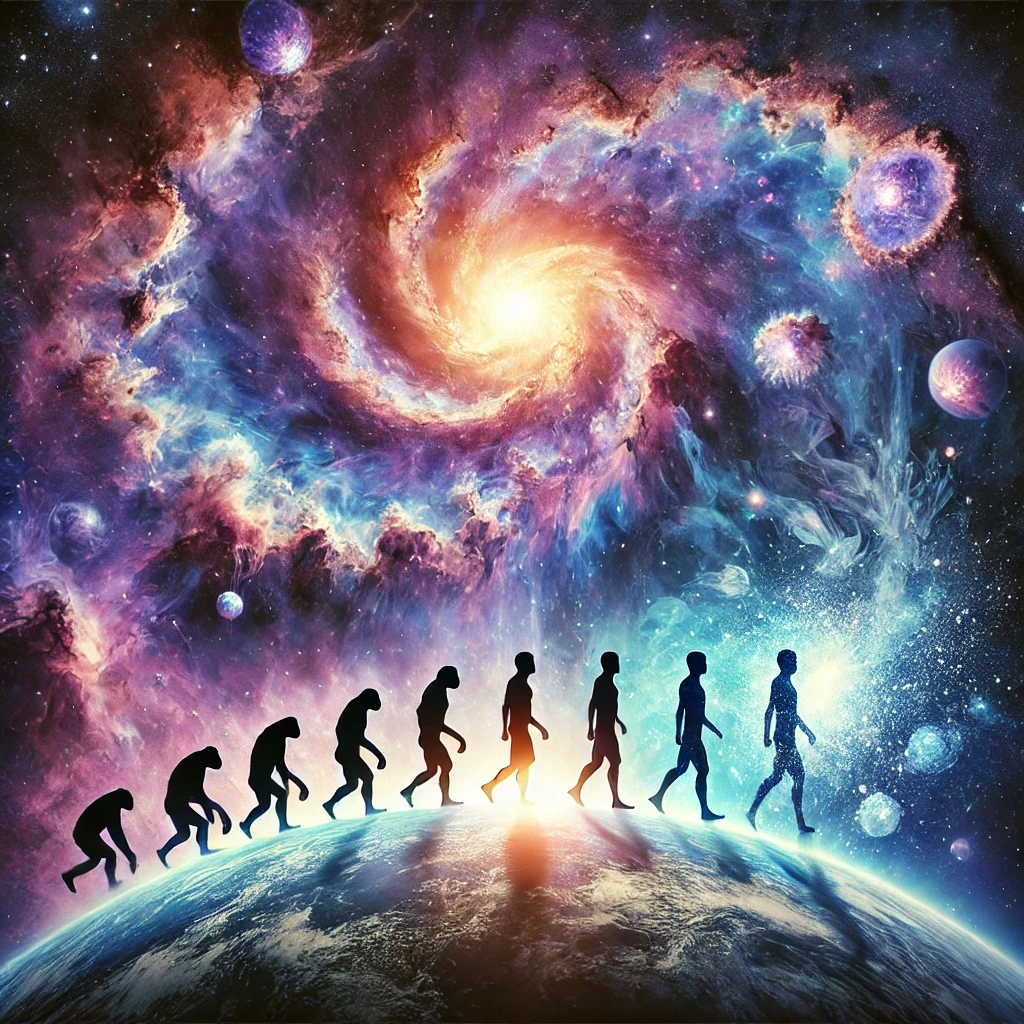
Every worldview must answer a fundamental question: Where did everything come from? Our understanding of origins influences how we understand the universe, human existence, and our place within creation. If the universe is ultimately the product of impersonal natural processes without purpose or design, we will approach life differently than if we believe everything exists because of an intentional and sovereign Creator. The question of origins is therefore not simply a scientific discussion. It is also a philosophical and theological question concerning the nature of reality and the existence of God.
The Bible begins with a clear declaration in Genesis 1:1: “In the beginning, God created the heavens and the earth.” Scripture does not introduce God as someone who must first be explained or justified. It presents Him as the eternal Creator who exists independently of everything He has made. John 1:1–3 further explains that all things were made through the Word, identifying Christ as central to creation. The universe is not self-existent, and humanity is not an accident without ultimate purpose. Everything that exists depends upon God for its existence and continued preservation. This understanding establishes the foundation for a biblical worldview.
Naturalism offers a different starting point. Philosophical naturalism holds that nature is all that exists and that supernatural explanations are unnecessary or invalid. It attempts to understand the universe through natural processes, physical laws, and material explanations. It is important to distinguish naturalism from the scientific method itself. Science investigates the natural world, and Christians have every reason to appreciate careful scientific research. The disagreement arises when scientific investigation is turned into a philosophical claim that nothing exists beyond the material universe. Science can describe many processes within creation, but it cannot, by itself, establish that God does not exist. A scientific explanation of how something occurs does not necessarily eliminate the question of why anything exists in the first place.
The question of origins leads naturally to another important question: What is truth? Our culture frequently treats truth as something personal, flexible, and dependent upon individual experience. We hear statements such as, “That may be true for you, but it is not true for me.” While people can certainly have different experiences and interpretations, truth itself does not change simply because someone disagrees with it. If a statement accurately describes reality, it remains true regardless of whether someone accepts it. Jesus declared in John 14:6, “I am the way, and the truth, and the life.” Christianity does not present truth as something humanity invents. Truth is grounded in the character of God, who is Himself truthful and has revealed His Word as truth.
Jesus also prayed in John 17:17, “Sanctify them in the truth; your word is truth.” This statement establishes the importance of Scripture in the Christian understanding of reality. God’s Word is not merely a collection of religious opinions or ancient moral suggestions. It is His authoritative revelation concerning Himself, humanity, sin, redemption, and the purpose of life. This does not mean Christians possess complete knowledge of everything. It means that what God has revealed is trustworthy, and our understanding must be shaped by that revelation. We should approach difficult questions with humility while maintaining confidence in the reliability of God’s Word.
Timothy Keller’s Making Sense of God is particularly helpful in examining the assumptions behind modern secular thinking. Keller challenges the idea that secularism is automatically neutral or that religious belief is uniquely irrational. Secular people also operate from assumptions about the nature of existence, human dignity, morality, and meaning. John Stott’s Basic Christianity helps establish the central claims of the Christian faith, while Wayne Grudem’s Systematic Theology provides a deeper examination of God, creation, revelation, and biblical authority. Together, these resources help us recognize that our understanding of origins and truth cannot be separated from our understanding of God.
Ultimately, the question is not whether we can explain every mystery of the universe. There are questions that remain beyond our present understanding, and intellectual humility is essential. The question is whether our starting point provides a sufficient explanation for the reality we experience. The biblical worldview recognizes an eternal, personal, intelligent, and sovereign Creator. It provides a foundation for understanding the existence of the universe, the value of human life, and the existence of objective truth. If God created us, then reality is not ours to redefine according to our preferences. We are responsible for discovering and responding to the truth He has revealed.
Works Cited
Evans, William. The Great Doctrines of the Bible. Project Gutenberg, https://www.gutenberg.org/ebooks/6038.
Grudem, Wayne A. Systematic Theology: An Introduction to Biblical Doctrine. 2nd ed., Zondervan Academic, 2020.
Keller, Timothy. Making Sense of God: An Invitation to the Skeptical. Viking, 2016.
Stott, John R. W. Basic Christianity. InterVarsity Press.


Leave a Reply